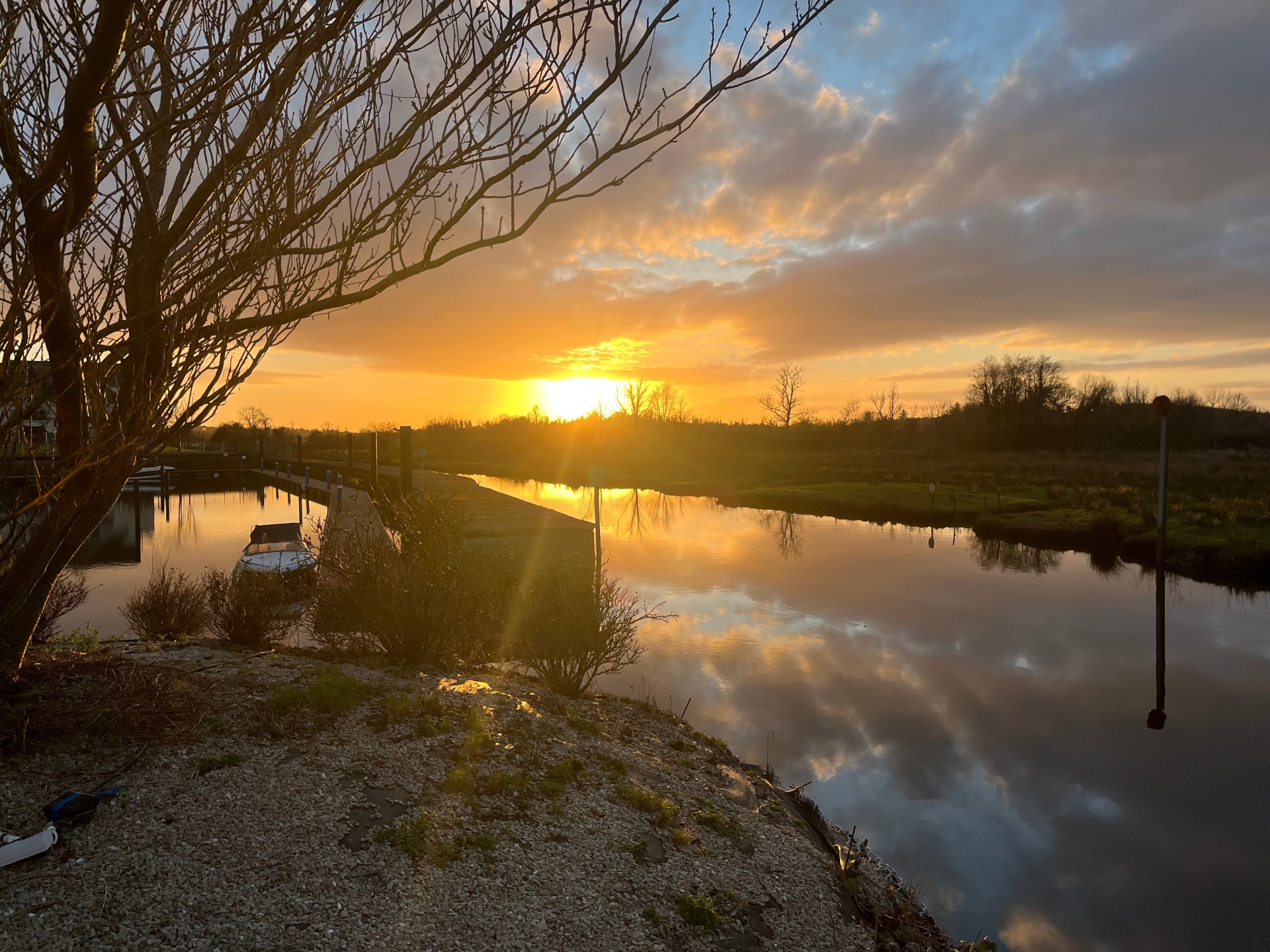
River Erne
The Erne winds through Fermanagh, forming two great navigable lakes dotted with monastic islands. Fishing, houseboats and medieval ruins make up an authentic outdoor itinerary.
The Erne is a river in Irlande that flows through County Fermanagh before emptying into the Atlantic at Ballyshannon in Donegal. Along the way, it forms two great lakes — Lower Lough Erne and Upper Lough Erne — which constitute one of the most extensive inland navigation systems in the British Isles. Fishing, pleasure boating, monastic islands and drumlin landscapes make it a destination in its own right for outdoor enthusiasts.
Practical information at a glance
- Access: Enniskillen is the main town on the Erne; accessible by bus from Belfast and Dublin.
- Navigation: houseboat rental available in Enniskillen and at several marinas on the lakes.
- Fishing: permit required (Irish fishing permit for the Republic section, DAERA permit for the Northern Ireland section).
- Recommended duration: one day for the lakes by boat; several days for a complete Erne circuit.
- Best time: May to September for navigation and pike fishing.
What to see
Lower Lough Erne stretches north-west of Enniskillen, scattered with around a hundred islands. Some hold early medieval Christian remains. Upper Lough Erne, further south, is a labyrinth of channels and small low islands. The river connects the two lakes as it flows through Enniskillen, where the medieval castle is reflected in the water.
History and context
The Erne has shaped Fermanagh's history since the Iron Age. Its islands served as monastic refuges from the 6th century onwards. In the Middle Ages, the Maguires, Gaelic lords of Fermanagh, controlled the river from Enniskillen. The Plantation of Ulster in the 17th century transformed the region, leaving a network of castles and plantation houses visible from the water.
Highlights of the visit
Devenish Island
Devenish Island, on Lower Lough Erne, preserves a 12th-century round tower among the best-preserved in Irlande, as well as the ruins of Saint Molaise Abbey founded in the 6th century. A seasonal ferry departs from Trory Point.
White Island
White Island is home to eight early medieval stone sculptures lined against a Romanesque church wall. Their iconography remains partially enigmatic. Access is by ferry from Castle Archdale Marina.
Enniskillen Castle
Built by the Maguires in the 15th century, the castle overlooks the confluence of the two lakes. It now houses the Fermanagh County Museum and the Inniskilling Fusiliers Museum.
Navigation on the lakes
The Erne system offers over 500 km of navigable waterways linked to the Shannon via the Shannon-Erne Canal. Houseboats allow you to explore the islands at your own pace, mooring directly on the banks.
Photography tips
The early morning raking light on Lower Lough Erne reveals the reflections of wooded islands. Devenish's round tower photographs best from the ferry as you approach. For White Island's sculptures, diffuse light (overcast sky) avoids harsh shadows on the stone reliefs.
Location and access
The Erne flows through County Fermanagh in Northern Ireland, with its outlet in the Republic of Irlande (Donegal). Enniskillen, midway along its course, is the natural entry point. The town is around 90 km south-west of Belfast. There is no railway station in Enniskillen; Translink and Bus Éireann services connect to the town. The marinas at Castle Archdale and Enniskillen offer boat rentals. Accessibility for disabled visitors varies depending on island sites; main landing points are generally accessible.
Nearby
- Enniskillen Castle — medieval fortress of the Maguires, now a museum, in the heart of the town.
- Devenish Island — monastic island with 12th-century round tower, accessible by seasonal ferry.
- Florence Court — Georgian mansion of the National Trust in the hills south-west of Enniskillen.
- Marble Arch Caves — limestone cave system designated a UNESCO global geopark, about twenty kilometres from Enniskillen.
Frequently asked questions
From May to September, weather conditions are most favourable and ferries to the islands operate. Summer remains the high season for houseboat rental.
Yes. The northern section (Northern Ireland) requires a DAERA permit; the southern section (Republic of Irlande) requires an Inland Fisheries Ireland permit. Both are separate and must be obtained independently.
A seasonal ferry departs from Trory Point, north of Enniskillen. The crossing is short. Check schedules with the Fermanagh Tourist Information Centre before travelling.
Yes, the caves are located about twenty kilometres from Enniskillen. One day is enough to combine a morning on the lake and an afternoon visit to the caves.
Yes. The Shannon-Erne Canal connects the Erne system to the River Shannon, allowing a navigation circuit of several hundred kilometres through the Irish interior.
Interested in this visit?
We can include it in your personalised itinerary.