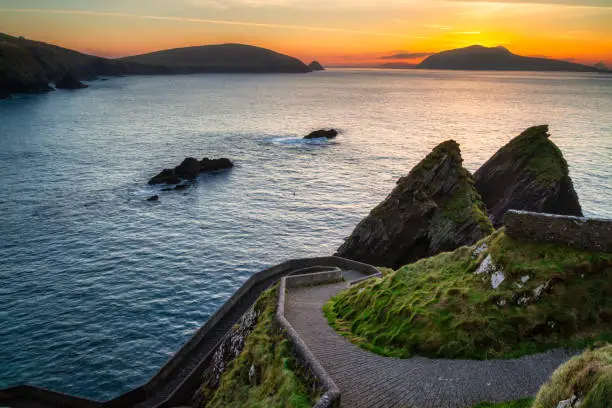
Carrigan Head
A rocky promontory in County Donegal, Carrigan Head rises above the Atlantic with unspoiled cliffs and sweeping vistas toward Slieve League. A hidden natural gem, perfect for lovers of wild Irish coastlines.
Carrigan Head is a rocky promontory situated on the south-west coast of County Donegal, near the village of Kilcar. Overlooking the waters of Donegal Bay, this headland features sheer cliffs and expansive views across the Atlantic toward neighboring islands. It is a discrete natural site, frequented primarily by hikers and lovers of wild coastal landscapes, away from Ireland's busier tourist circuits.
What to see
The headland is distinguished by its vertiginous cliffs plunging directly into the ocean. On clear days, the panorama extends toward the Aran Islands to the south and toward Slieve League to the north-west. The sparse vegetation typical of Irish Atlantic coasts — heather, sea grasses — covers the heights. Seabirds, notably fulmars and kittiwakes, nest in the rock faces.
History and context
Carrigan Head sits within the Donegal coastline, a historically Gaelic region that remained removed from major colonial transformations. The cliffs and headlands along this stretch of coast once served as natural landmarks for local fishermen navigating between coastal villages. The site has no identified historical monument, but it is embedded in a territory marked by vibrant Irish culture.
Highlights of your visit
The cliffs and shoreline
Approaching the cliff edge reveals the raw power of Atlantic erosion. The rock strata, predominantly quartzite and schist, form geological profiles legible to the naked eye. Caution is essential: the ground can be slippery and the edges are unsecured.
The panorama toward Slieve League
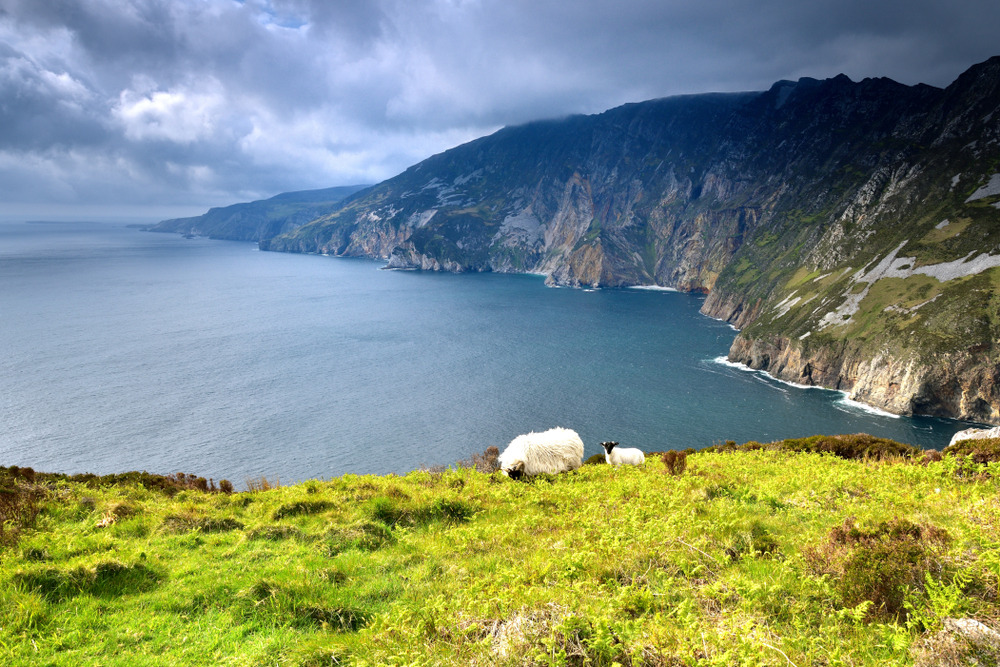
On clear days, the cliffs of Slieve League — among Europe's highest — are visible toward the north-west. This natural framing between two major coastal sites of Donegal constitutes one of the headland's principal attractions.
Photography tips
Late afternoon light, angled toward the west, illuminates the cliffs and Atlantic horizon directly. On days with moderate winds, waves create dynamic contrasts at the base of the cliff walls. Avoid days of heavy mist that obscure the depth of the panorama. Maintain a safe distance from the edge for security reasons.
Location and access
Carrigan Head lies a few kilometers south-west of Kilcar, accessible by narrow rural roads. An informal parking area exists near the coastal path. The site is part of Donegal's network of coastal trails. No regular public transport serves the headland directly; a personal vehicle is necessary. Wheelchair access is limited due to the natural, unimproved terrain.
Nearby attractions
- Slieve League Cliffs — one of Ireland's most spectacular coastal sites, a short distance to the north-west.
- Kilcar — a coastal village renowned for its tweed workshops and traditional Irish craftsmanship.
- Killybegs — Ireland's principal fishing port, to the east, with authentic maritime activity.
Frequently asked questions
From May to September, days are long and weather conditions more favorable. Irish summer remains windswept; pack warm clothing even in July.
Access to the headland is free. There is no ticketing or visitor facilities on-site.
Yes, the two sites are close and easily visited on the same day by car. Slieve League requires more time and physical effort.
The cliffs are not secured by barriers. Constant supervision of children is essential near the edge.
Waterproof hiking boots and wind-resistant clothing are recommended. The terrain is grassy and can be muddy after rain.
Interested in this visit?
We can include it in your personalised itinerary.