Slane
Slane
A village in County Meath, Slane combines Saint Patrick's Hill, a unique Georgian crossroads and a castle on the Boyne — the ideal gateway to the megalithic sites of the valley.
Slane is a village in County Meath, Ireland, situated on the banks of the Boyne. Known for its hill steeped in Christian history, its neo-Gothic castle and legendary open-air concerts, it concentrates within a few square kilometers layers of Irish memory — from the Iron Age to the great rock festivals of the 1980s and 2000s.
Quick facts at a glance
- Access: approximately 48 km north of Dublin, accessible by car via the N2 or M1/N51.
- Recommended duration: half a day is enough for the village and hill; a full day if you combine it with the Boyne Valley.
- What to wear: walking shoes recommended for the climb up Slane Hill.
What to see
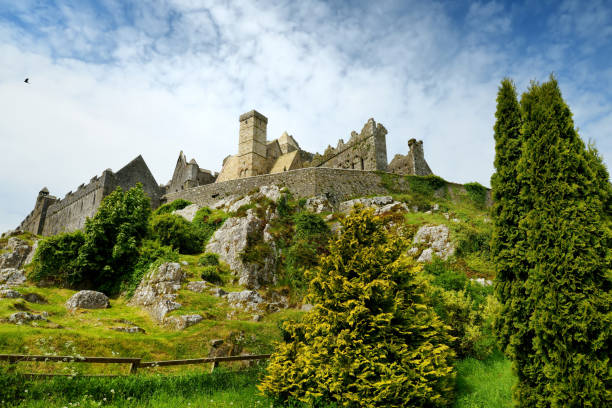
The village is organized around a central crossroads flanked by four identical Georgian townhouses, an architectural curiosity from the 18th century. Slane Hill overlooks the Meath plain and is home to the ruins of a Franciscan church and a medieval round tower. Below, Slane Castle — property of the Conyngham family — borders the Boyne in a wooded park.
History and context
Saint Patrick is associated with Slane Hill: according to tradition, he lit an Easter fire there in 433 AD, defying King Laoghaire of Tara whose ritual fire burned a few kilometers away. This symbolic gesture marks the beginning of the evangelization of Ireland. The site later hosted a monastery founded by Saint Erc, a disciple of Patrick.
The castle was rebuilt in neo-Gothic style in the early 19th century. Its estate became a major concert venue: U2, Bruce Springsteen, Madonna and the Rolling Stones have all performed there in front of crowds of 80,000 to 100,000 people.
Highlights of your visit
Slane Hill
The climb on foot from the village takes about twenty minutes. At the summit, the ruins of the 16th-century Franciscan college and the cemetery offer a panorama over the Meath plain and the Boyne Valley. On clear days, Tara Hill is visible on the horizon.
The Georgian crossroads
Four identical houses with limestone facades frame the village's central intersection. Built in the 18th century for the Marquis of Conyngham, they represent a rare example of planned urbanism in rural Ireland.
The castle and the Boyne
Slane Castle is not always open to the public outside events, but its surroundings and the bridge over the Boyne are worth a visit. The river, framed by beeches and oaks, is particularly beautiful in autumn.
Photography tips
Morning light is ideal on the Georgian crossroads, before traffic builds up. From the top of the hill, sunset reveals the Meath plain in golden tones. The ruins of the Franciscan church photograph well in low-angle shots from the cemetery.
Location and access
Slane is located in the Boyne Valley, approximately 15 km west of Drogheda and 48 km north of Dublin. A car is the most convenient means of travel. The village is the ideal starting point for exploring the heritage of the Boyne Valley, which groups together several major megalithic and historical sites.
Nearby attractions
- Newgrange — Neolithic megalithic mound, one of Europe's oldest funerary monuments, approximately 12 km away.
- Tara Hill — former seat of the High Kings of Ireland, visible from Slane on clear days, approximately 16 km away.
- Drogheda — medieval town on the Boyne with the relic of Saint Oliver Plunkett, approximately 15 km away.
- Knowth — megalithic site in the Boyne Valley, rich in rock art, approximately 10 km away.
Frequently asked questions
The castle is a private property. It opens occasionally for guided tours and events. Contact the castle directly before your visit for information.
Yes, a path starts from the village center. The climb takes approximately 20 minutes at a leisurely pace. Walking shoes are recommended, especially in damp conditions.
Spring and autumn offer the best conditions: soft light, colorful vegetation and fewer crowds. Summer corresponds to the concert season, which can make the village very busy on certain weekends.
Yes, the two sites are approximately 12 km apart. Plan to book your Newgrange visit in advance, as time slots fill up quickly during peak season.
The village has a few pubs and a café. For more options, Drogheda 15 km away offers a wider choice.
Want to discover this destination?
Our local advisors design your tailor-made trip.