Dunfanaghy
A coastal village in northern Donegal, Dunfanaghy is the gateway to the cliffs of Horn Head, dune-backed beaches and a Victorian workhouse that bears witness to the Great Irish Famine.
Dunfanaghy is a coastal village in the north-west of County Donegal, nestled between Sheephaven Bay and the cliffs of Horn Head cape. Small in size, it concentrates a wild coastline, some of Ireland's most extensive dunes and an end-of-the-world atmosphere that stands apart from conventional tourist circuits. It's a solid base for exploring the Horn Head peninsula and the landscapes of the Wild Atlantic Way.
Practical information at a glance
- Access: on the N56, approximately 75 km north-west of Letterkenny; a car is recommended, as public transport is limited in this area.
- Recommended duration: a full day for the village and Horn Head; two days to combine beach, hiking and Marble Hill.
- What to wear: waterproof clothing and walking shoes are essential, as wind can be violent at any time of year.
What to see
The village itself is compact: a few streets of colourful houses, art galleries, pubs and a Victorian workhouse converted into a heritage centre. Killahoey beach, accessible on foot from the centre, offers white sand bordered by dunes. Sheephaven Bay can be discovered from several viewpoints accessible by car or bike.
History and context
Dunfanaghy was founded as a plantation village in the 17th century. Its workhouse, built in the 1840s, housed hundreds of people during the Great Famine. The building now houses a permanent exhibition centred on the testimony of Wee Hannah Herrity, a local survivor, making it one of Ireland's most personal Famine memorials.
Highlights of your visit
Horn Head
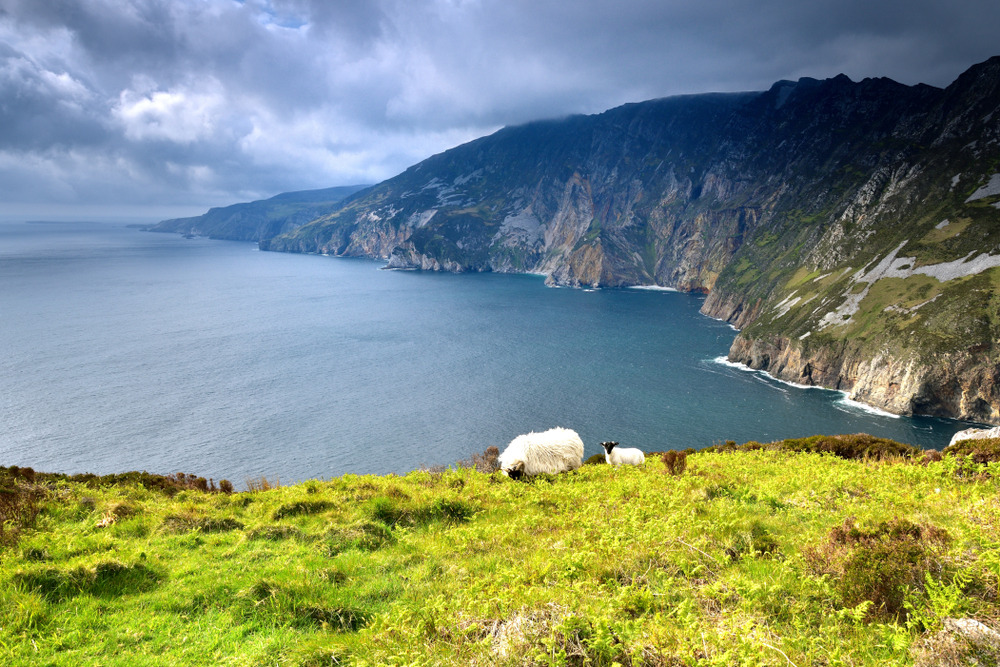
The Horn Head peninsula, a few kilometres from the village, rises to over 180 metres above the sea. The circular route offers views of the quartzite cliffs, puffin colonies and, on clear days, the Tory and Inishbofin islands. The coastal path takes approximately two to three hours to walk.
Dunfanaghy Workhouse
This listed building tells the story of the Famine through understated staging and local archives. The exhibition on Wee Hannah is particularly well-documented. Admission is charged; check seasonal opening hours on the website before your visit.
Marble Hill Strand
A few kilometres to the east, this crescent-shaped beach is sheltered by dunes and woodland. It's known for surfing and summer swimming, with relatively sheltered waters compared to the exposed beaches of Horn Head.
Photography tips
The golden light of late afternoon on Horn Head's cliffs is the most photogenic. Arrive early at Killahoey beach to avoid the strongest wind and capture reflections on wet sand. On stormy days, waves against the cliffs offer dramatic images, but keep a safe distance from the edges.
Location and access
Dunfanaghy is situated on the N56, the main road in northern Donegal. Letterkenny, the largest town in the county, is approximately 75 km to the south-east. The car is the most practical means of transport; bus services exist from Letterkenny but are infrequent. The village itself is flat and accessible on foot at its centre, but the Horn Head trails are not suitable for wheelchairs.
Nearby
- Horn Head — cliff peninsula and seabird colony, a few minutes' drive away.
- Tory Island — inhabited island offshore, accessible by ferry from Magheroarty, known for its school of naive painting.
- Glenveagh National Park — lakes, castle and moorland approximately 30 km to the south-east, one of Ireland's major national parks.
- Falcarragh — neighbouring Irish-speaking village, departure point for the ferry to Tory.
Frequently asked questions
From May to September, days are long and trails are passable. July and August are the busiest. Outside summer, the village is quiet and the landscapes remain spectacular, but some accommodation and attractions close.
Yes, a car is highly recommended. Public transport serves the village from Letterkenny, but frequencies are low and Horn Head or Marble Hill are not accessible without a vehicle or bike.
The Horn Head coastal trail is moderate: uneven terrain, limited elevation gain, but significant wind exposure. Allow two to three hours for the full circuit. Walking shoes and a waterproof jacket are essential.
Yes, the two sites are approximately 30 km apart. A day is enough for each; in two days from Dunfanaghy, you can cover Horn Head on the first day and Glenveagh on the second.
Personal photographs are generally tolerated inside, but check with reception on your visit, especially in sensitive exhibition areas related to the Famine.
Want to discover this destination?
Our local advisors design your tailor-made trip.