Glencolmcille Folk Village (Open-Air Museum)
Nestled in an isolated valley in Donegal, Glencolmcille Folk Village recreates three centuries of Irish rural life through authentically furnished thatched cottages, managed by the local community since 1967.
Nestled in an isolated valley in Donegal, Glencolmcille Folk Village recreates three centuries of Irish rural life. Founded in the 1960s by Father James McDyer to stem rural depopulation, this open-air museum features a collection of authentically furnished thatched cottages from different eras. The site remains managed by the local community, lending it a rare authenticity among Irish open-air museums.
Practical Information at a Glance
- Admission: paid entry (adult rate, reduced rate for children/seniors — verify on-site)
- Recommended duration: 1.5 to 2 hours
- Access: car recommended — Glencolmcille is approximately 70 km southwest of Letterkenny, with narrow roads
- Season: open mainly from Easter to end of September; closed off-season
- On-site: craft shop, café/tearoom
What You'll See
The recreated village comprises a series of cottages dating from the 18th, 19th, and early 20th centuries respectively. Each thatched cottage is furnished and decorated according to its period: central hearth, box bed, agricultural tools, everyday objects. A period national schoolhouse and tavern complete the ensemble. Guides—often local residents—explain the customs and stories associated with each room.
History and Context
Glencolmcille takes its name from Saint Columba (Colm Cille), a 6th-century Irish monk. The valley, once among the poorest in Donegal, nearly emptied after World War II. Father McDyer, a priest who arrived in 1953, launched local cooperatives and created the Folk Village in 1967 to generate tourism revenue while preserving collective memory. This model of community development is still cited as exemplary in rural Irlande.
Highlights of Your Visit
Period Cottages
Each thatched cottage tells a vivid story. The contrast between the 18th-century cottage—with its earthen floor and bare furnishings—and the early 20th-century one—with painted furniture and an oil lamp—concretely illustrates the evolution of living conditions.
The Cooperative Shop
Adjacent to the museum, the Oideas Gael shop offers local products: Donegal tweed, artisanal seaweed-based liqueurs, preserves. Purchases directly support the community cooperative founded by Father McDyer.
The Natural Setting
The village sits facing Glen Bay. The surrounding cliffs and moorland form an integral part of the immediate landscape. A short walk from the site leads to the coast and prehistoric megaliths scattered throughout the valley.
Photography Tips
Morning light is softer on the whitewashed facades. The interior of the cottages is dim—a fast lens or high ISO setting is useful. Avoid flash near fragile furnishings. Framing from the hill above the site offers an overview of the thatched roofs and bay.
Location and Access
Glencolmcille lies at the tip of the Slieve League peninsula in southwest Donegal. The route from Slieve League cliffs (approximately 20 km northeast) is spectacular but narrow. From Donegal Town, allow approximately one hour's drive. No regular public transport serves the village—a car is essential. The site is partially accessible to people with reduced mobility (gentle slope, some cottages with thresholds).
In the Surrounding Area
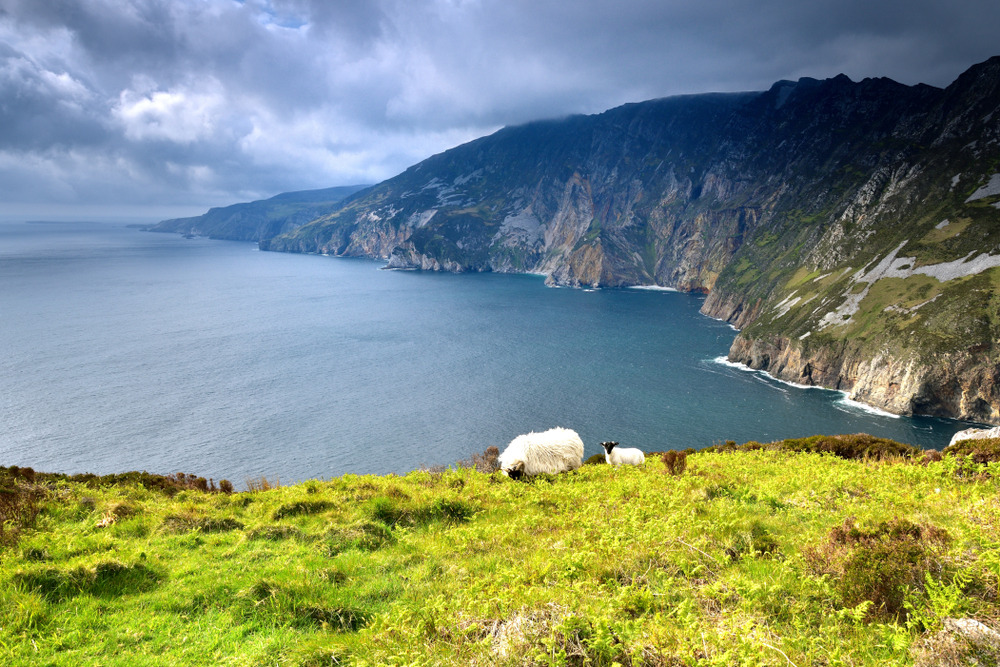
- Slieve League Cliffs — among Europe's highest sea cliffs, approximately twenty kilometres northeast.
- Malin Beg Beach (Silver Strand) — beach in a natural amphitheater, a few kilometres south of the village.
- Donegal Town — the county's main town, with its castle and tweed shops.
Frequently asked questions
The site is open from Easter to end of September. July and August offer the best weather, but also more visitors. June and September are often quieter.
Generally, entry is on a first-come, first-served basis. In high season, it's advisable to arrive in the morning to avoid school groups or tour coaches.
Yes, this is the most common combination in the region. Plan a full day: the cliffs in the morning, the Folk Village in the afternoon, or vice versa depending on your starting point.
A tearoom offers hot beverages and light snacks. For a full meal, options are limited in the village—it's better to plan ahead or visit Killybegs or Donegal Town.
Photography is generally permitted for personal use. Avoid flash to preserve historic objects and respect any notices posted in each room.

Interested in this visit?
We can include it in your personalised itinerary.